
ZipYacht · Owners’ Club
From a cabin repair to a central-plant refit: understand the scope, compare the quote, and ask better questions.
Repair is worth considering when a technician identifies an isolated fault and the rest of the system is sound. Replacement deserves a closer look when failures recur, critical parts are unavailable, or the repair offers poor value against a compatible, fully installed replacement. Cost depends on what is being repaired or replaced. A single cabin unit’s retail price cannot estimate the installed cost of cooling a 70–80-foot yacht—or refitting a 100-meter yacht’s central plant. Start with the system and the scope, then price the work.
You planned a quiet weekend aboard. Instead, the salon is warm, the fan is running, and somebody has already suggested a new air conditioner.
Before you approve it, ask one question: What has actually failed?
A useful marine AC quote should answer that question before it tells you what to buy. This Owners’ Club guide will help you separate a repairable problem from a sensible replacement—and compare the whole job rather than the most attractive number on the first page.
First, identify the system you own
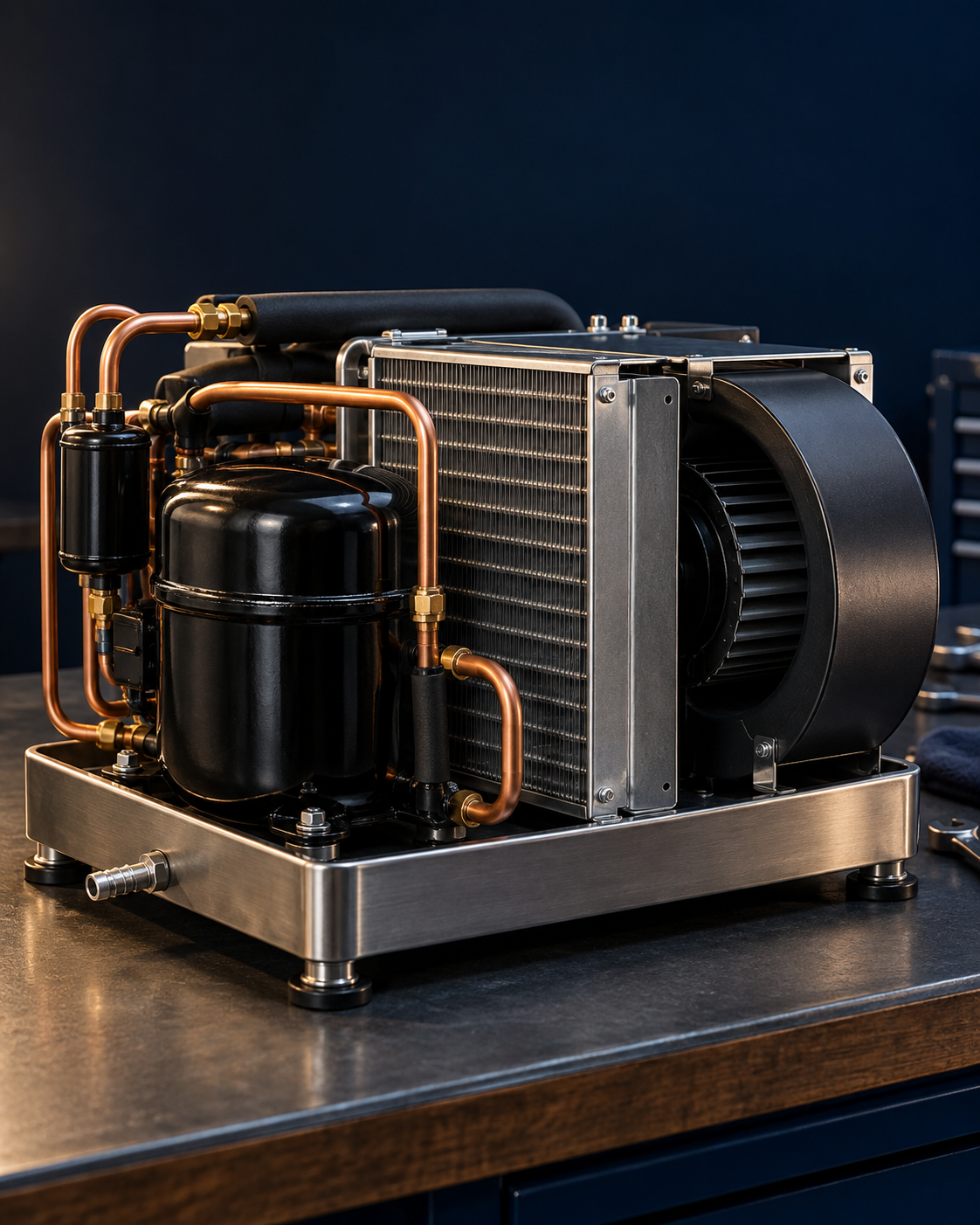
A self-contained unit packages the cooling equipment and blower together for a cabin or zone. A split system separates parts of that equipment. A chilled-water installation uses a central chiller and a water loop feeding cabin air handlers. These are different replacement projects, even if the symptom is the same warm stateroom.
Photograph the equipment label and controller. Record the model, voltage, capacity, fault code, affected cabins, and whether the problem happens at the dock, underway, or both. For chilled-water systems, ask whether the fault is in a cabin air handler, a shared loop, or the chiller itself. Replacing a cabin component is not the same decision as replacing the central plant. System overview: Flagship Marine/Webasto.
Four symptoms that need diagnosis—not guesswork
| What you notice | What to ask the technician to investigate |
|---|---|
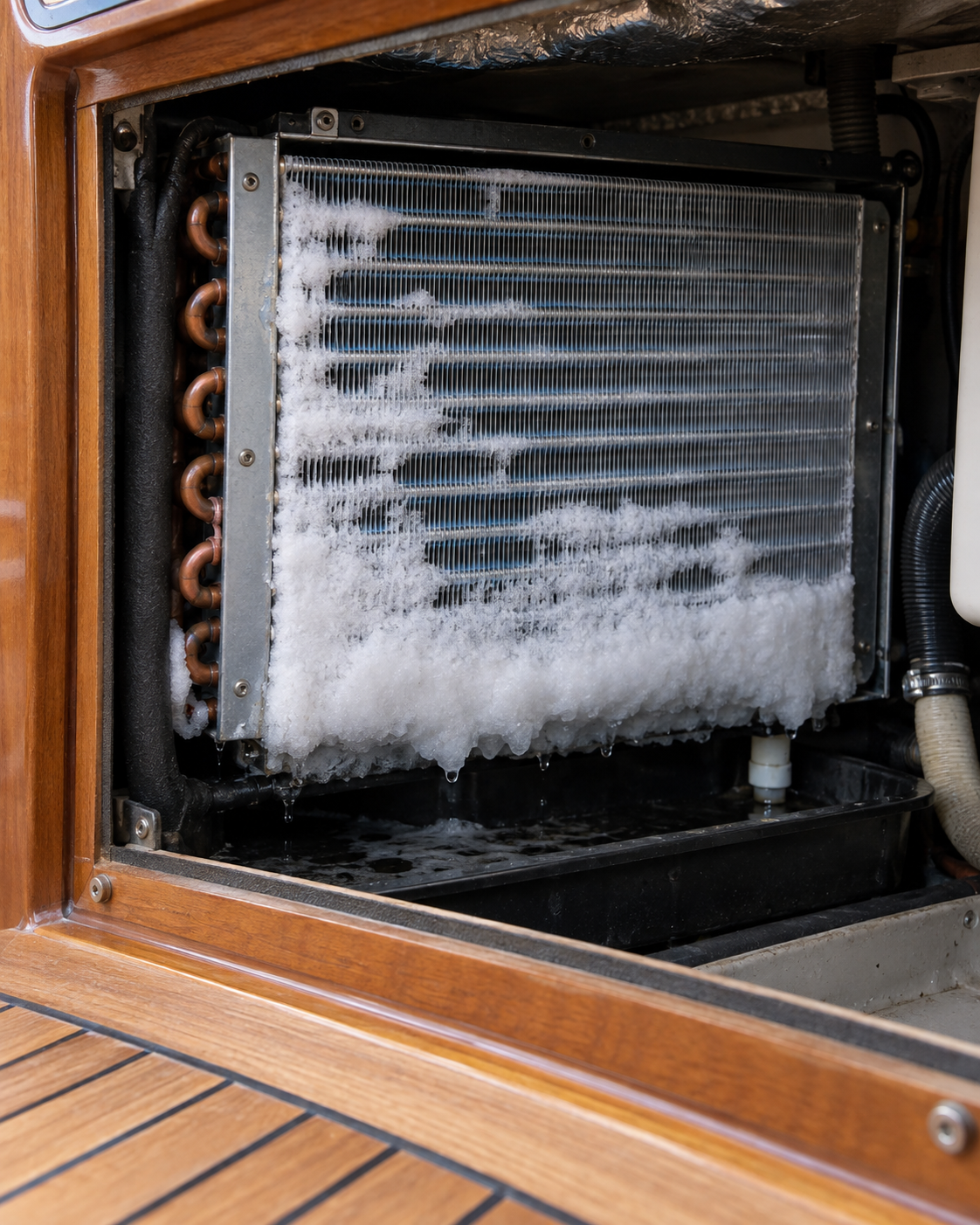
| Weak airflow or ice on the coil | Return-air restrictions, filter condition, ducting, and blower operation before condemning the cooling unit. |
| A high-pressure alarm while cooling | Seawater flow, intake and strainer restrictions, pump operation, and condenser condition. Interpret the code using your exact model’s manual. |
| Water beneath the unit | Whether the source is condensate drainage or a seawater leak. The source determines the response. |
| Failure to start or repeated shutdowns | The recorded fault code, power supply, controls, and the cause of any protective shutdown. |
These are investigation paths, not remote diagnoses. Dometic’s troubleshooting guide and control manual describe these common relationships.
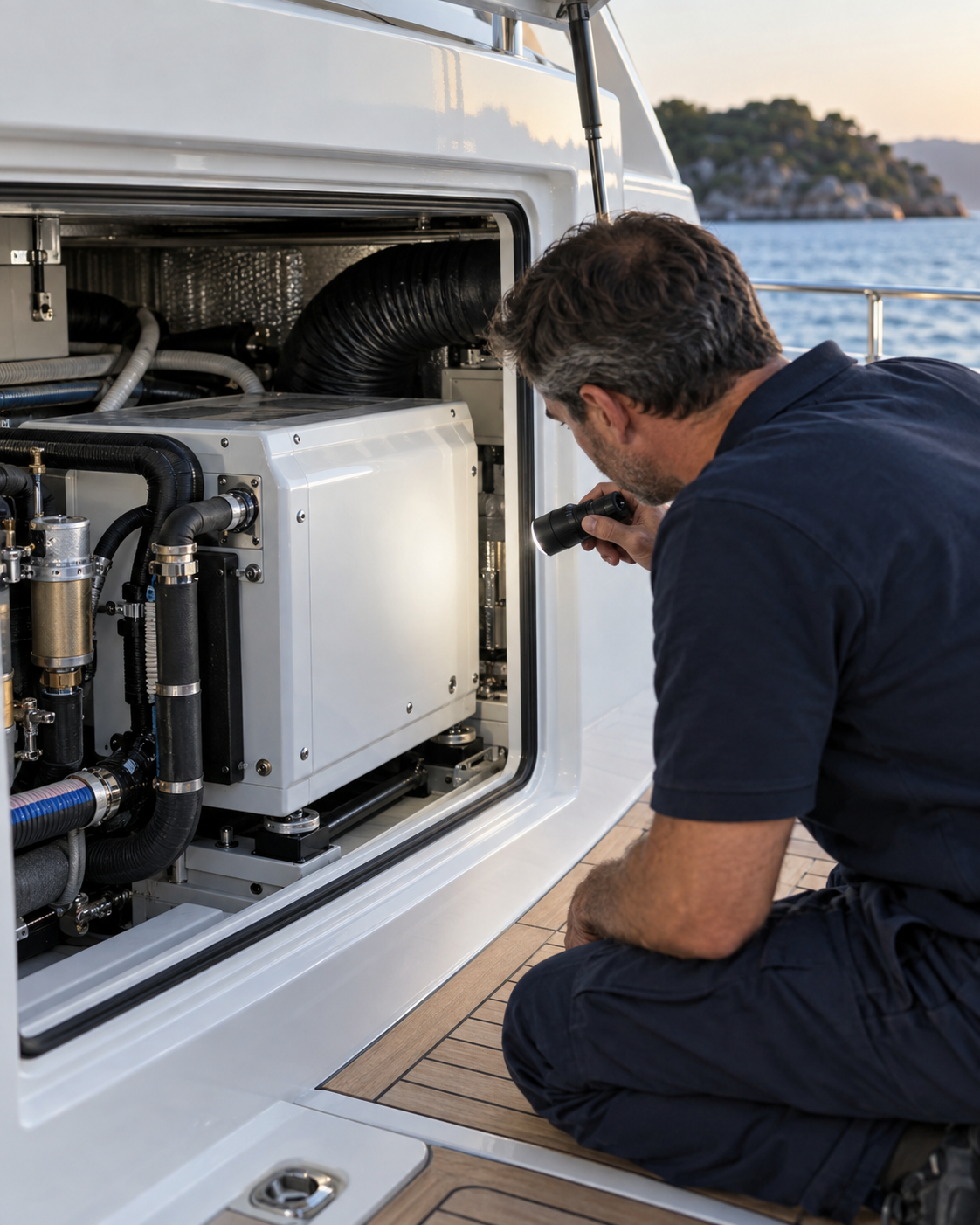
Keep owner checks simple: record the settings and error code, look for obvious blocked grilles, and note any change in discharge flow from a safe position. Electrical testing, refrigerant work, chemical cleaning, and opening seawater plumbing belong with a qualified marine technician. An active seawater leak, burning smell, or repeated breaker trip warrants stopping the system and getting assistance—not repeated resets.
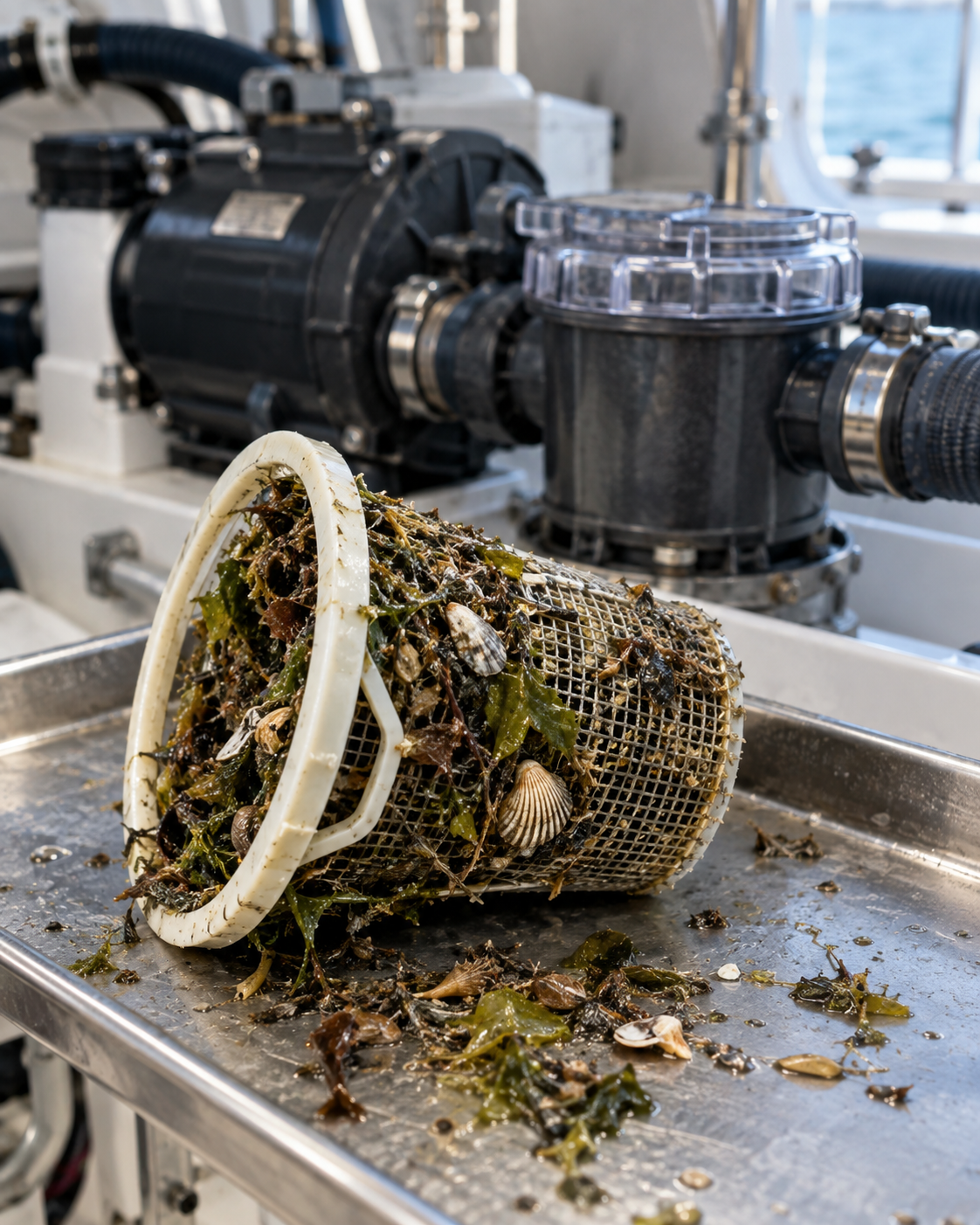
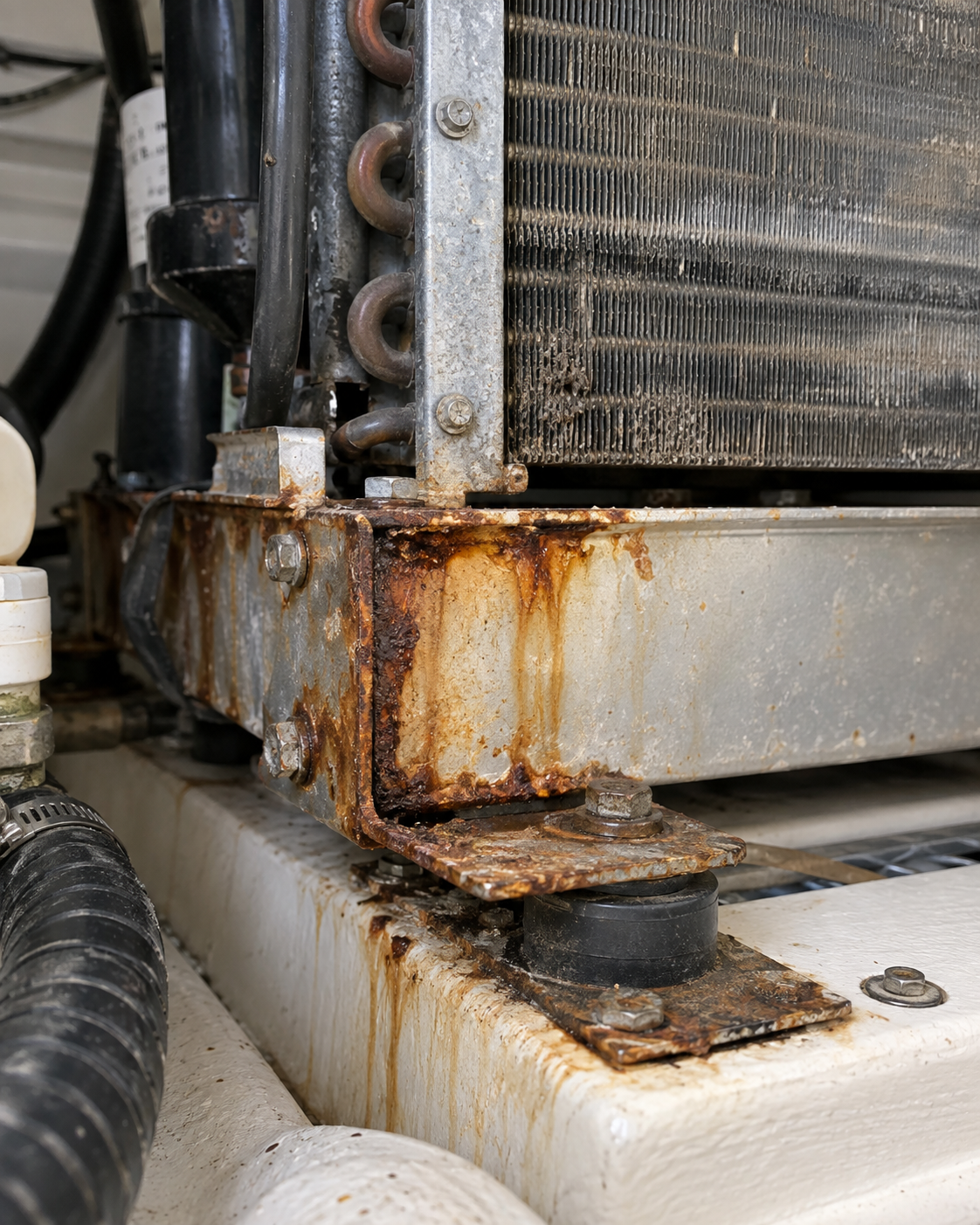
What some problems can look like
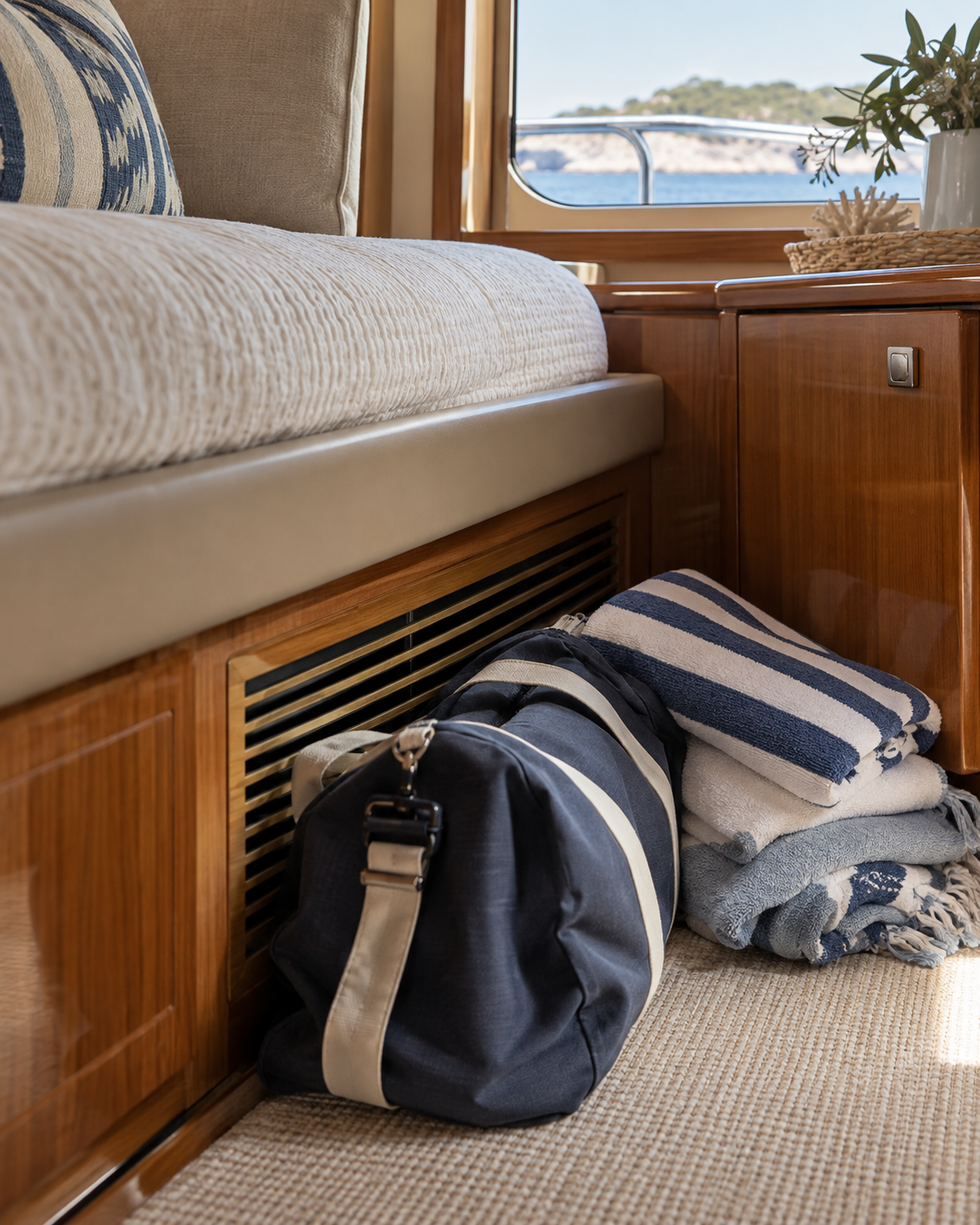
Illustrated examples, not customer cases or diagnostic photographs. Equipment and installation details vary.
When repair makes sense—and when replacement does
Ask for two written options when the decision is expensive or uncertain. Each should state what it fixes, what remains in service, and what could still cause trouble.
| Repair is more persuasive when… | Replacement is more persuasive when… |
|---|---|
| The fault is identified and limited to a serviceable component. | Several major components need work or breakdowns keep recurring. |
| The remaining equipment is in sound condition. | The technician documents extensive deterioration that affects reliability. |
| Parts and competent local support are available. | Essential parts are unavailable or lead times undermine the repair. |
| The repair has a clear scope, warranty, and convincing cost advantage. | A compatible replacement offers a stronger ownership case after installation and warranty are included. |
This is our decision framework, not a manufacturer’s replacement rule. There is no useful universal birthday at which every marine AC must be discarded. Nor would we approve a replacement simply because a repair crosses an arbitrary percentage of the equipment’s retail price.
Ask: “After this repair, what will still be old, and what evidence suggests it will remain dependable?” Then ask the replacement contractor the equivalent question about reused pumps, hoses, controls, and ductwork.
How much does marine AC repair or replacement cost?
There is no defensible single price for “yacht AC replacement.” A service call, one cabin unit, a chiller module, and a whole cooling-system refit cover different work. Compare quotes for the same scope, in the same currency, with installation and exclusions clearly stated.
What changes between a 70–80-foot yacht and a 100-meter yacht?
On a 70–80-foot yacht, first identify whether the work concerns an individual unit, a chilled-water air handler, a shared pump, or the central plant. The vessel’s length does not establish what failed or what must be replaced. An isolated repair can be a much smaller project than renewing the yacht’s entire system.
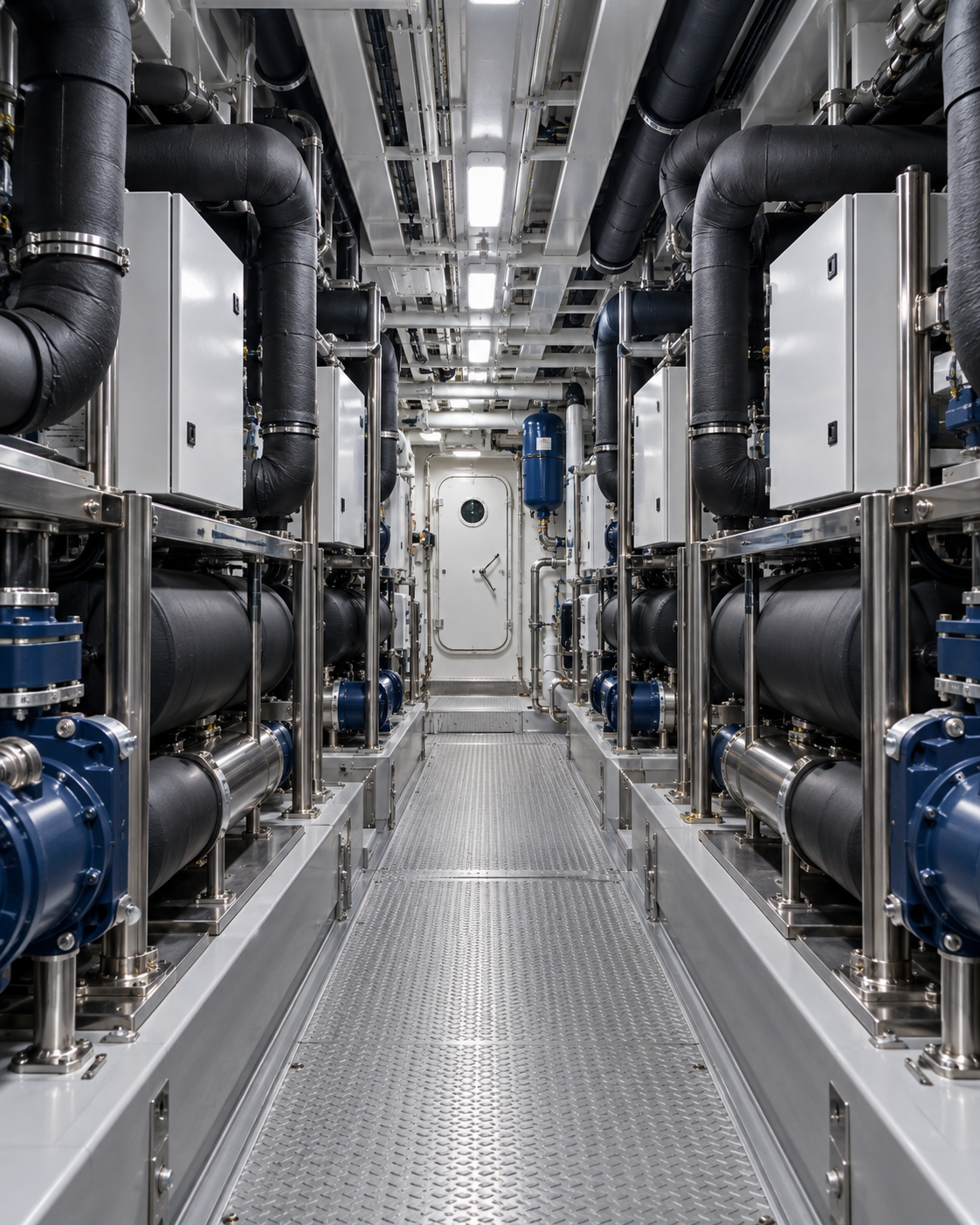
For a 100-meter yacht, a complete central-plant or HVAC refit needs an engineered scope and a vessel-specific budget. Equipment, distribution, controls, access, installation, and commissioning can extend far beyond a cabin-unit purchase. Conversely, a local fault aboard a large yacht does not automatically require a whole-plant refit.
Manufacturer catalogs show why these categories must stay separate. Frigomar lists modular centralized chillers up to 160,000 BTU/h per module in its ON/OFF range. Heinen & Hopman lists replacement chillers in 20–60 refrigeration-ton configurations, including design, onboard assembly, and commissioning services. Those are examples of system scale, not sizing recommendations or prices for a particular yacht. Frigomar specifications; Heinen & Hopman replacement systems.
| Scope | What the estimate must identify |
|---|---|
| Diagnosis or component repair | The confirmed fault, tests, parts, labor, and whether the underlying cause is corrected. |
| One self-contained cabin unit | The exact model and installation work; list reused pumps, ducting, wiring, and controls. |
| One chilled-water air handler | The cabin component and connections; explain whether the central plant and loop remain in service. |
| One chiller module | Compatibility with the remaining plant, controls integration, removal route, and commissioning. |
| Complete central plant or wider HVAC refit | Engineering, equipment schedule, distribution and ventilation scope, access works, yard services, and acceptance testing. |
Published prices for one small self-contained unit
The listings below cover individual 16,000-BTU units only. They are neither whole-yacht budgets nor an installed-price range, and they do not establish what equipment your vessel needs.
| Product listing | Displayed USD price | Limits of the example |
|---|---|---|
| MarinAire MSWA16C2, 208–230V | $2,728 sale price | One self-contained unit/heat pump. Confirm stock and included accessories. |
| Flagship Marine FM16R | $4,200 displayed price | One self-contained unit. Configuration options apply; installation kit is optional. |
Listings checked September 16, 2026. Prices and availability can change. Confirm selected configuration, tax, freight, installation, and warranty with the supplier. The two products are not presented as interchangeable.
No verified, comparable all-in budget for a 70–80-foot yacht or a 100-meter yacht was established from the sources reviewed. Applying these hardware prices per cabin, multiplying by vessel length, or adding a guessed installation percentage would create false precision.
What should the full installed quote include?
- Engineering and equipment: diagnosis, design basis where needed, exact models, capacity, controls, and accessories.
- Access and removal: the removal route, lifting, dismantling, joinery, protection, and restoration.
- Installation: labor, travel, yard charges, pumps, piping, insulation, electrical work, ducts, and drains; identify new and reused items.
- Completion: disposal, freight, taxes, testing, commissioning, documentation, and owner or crew handover.
- Commercial terms: exclusions, variation approval, lead times, cooling downtime, warranty, and callback responsibility.
Access deserves its own line. Heinen & Hopman offers replacement chillers assembled from kits carried through doors and hatches, illustrating how the removal and installation method can change a refit. This does not mean every chiller replacement requires a hull opening. Manufacturer’s access approach.
More BTUs are not automatically an upgrade
Before increasing capacity, have the installer review the space, solar heat gain, airflow, seawater supply, electrical capacity, and physical fit. Flagship Marine cautions that substantial oversizing can shorten run cycles and reduce dehumidification. A boat that reaches its temperature setting but remains clammy is not the result you are buying. Manufacturer sizing guidance.
Ask for the reason behind the proposed capacity. “That is what we usually fit” is less useful than an explanation tied to your yacht and cruising conditions.
Seven questions before you approve the work
- What failed, and how did you confirm it? Request a plain-English diagnosis and supporting observations.
- Will the proposed work address the underlying cause? Identify installation problems that would also affect a new unit.
- Exactly what is included? Compare model numbers and written exclusions.
- What will you reuse? Ask why those components are suitable for continued service.
- When can the boat be cooled again? Separate equipment lead time from installation time.
- What commissioning results will I receive? Agree on the operating checks and handover before work begins.
- Who handles a callback? Get warranty coverage and contact details in writing.
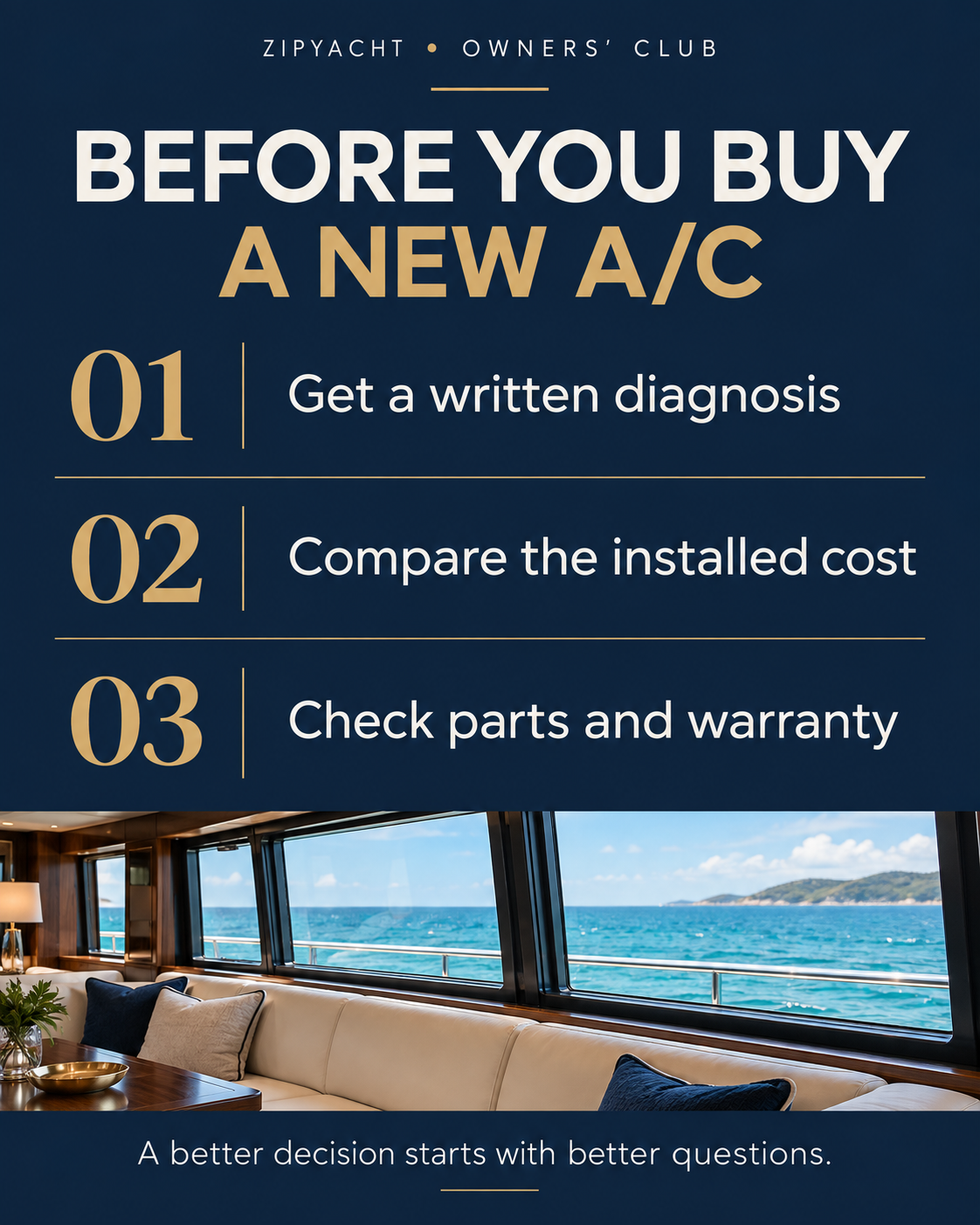
Send these facts with your quote request
Copy this brief for your contractor
Vessel make, model, length, and current location: ____
System type and equipment model/serial numbers: ____
Voltage, phase, frequency, and nameplate cooling capacity: ____
Affected spaces, symptoms, alarm codes, and when they occur: ____
Recent repairs and maintenance records: ____
Cruising climate, desired completion date, and access restrictions: ____
Please identify the cause, separate repair and replacement options where practical, list what you will reuse, and quote installation, exclusions, downtime, warranty, and commissioning separately.
Keep a record that makes the next decision easier
After the work, save the diagnosis, model and serial numbers, invoice, commissioning notes, and warranty together. Ask the technician for a maintenance schedule suited to your equipment and operating conditions. Dometic’s maintenance guidance highlights filters, seawater flow, pumps, drains, corrosion, and leaks as recurring inspection areas.
A simple service history changes the next conversation from “it seems to break a lot” to a record of what happened, what was repaired, and when.
Marine AC questions owners ask
How much does AC replacement cost on a 70–80-foot yacht?
Length alone is insufficient. Identify whether the quote replaces one cabin unit, an air handler, a chiller module, or the full system. The hardware examples above cannot price any of those installed projects without an onboard assessment and a defined scope.
What does a 100-meter yacht’s AC system cost to replace?
A whole-system figure requires engineering and contractor quotations specific to the vessel. Define the central plant, distribution, ventilation, controls, access, and commissioning work first. We found no verified public all-in price that can responsibly serve as a general budget.
Is a chilled-water air handler the same as an air conditioner?
It is a different component. In a chilled-water installation, the air handler transfers cooling from the water loop to a cabin; the chiller produces the chilled water. Replacing an air handler does not mean replacing the chiller.
How long should marine AC last?
This guide does not assign a universal service life. Use the equipment’s condition, service history, parts support, and documented diagnosis to assess remaining value. Calendar age alone is not enough to decide on replacement.
Is there a repair-cost percentage that means I should replace it?
No universal cutoff is used here. Compare the repair with a compatible, fully installed replacement, accounting for what stays old, warranty, downtime, and recurring faults. Comparing a repair invoice with a bare equipment price distorts the decision.
Does warm air mean the compressor has failed?
No. Restricted airflow, seawater-flow problems, controls, and other faults can produce poor cooling. Get a model-specific diagnosis before authorizing a compressor or complete-unit replacement.
Should I just have the refrigerant topped up?
Ask the technician to establish whether charge is actually the problem and investigate any suspected leak. A top-up without an explanation does not tell you whether the fault has been resolved. Dometic directs owners to service support where refrigerant loss is suspected.
Can I use the same BTU rating and swap the unit?
Matching capacity alone does not establish compatibility. The proposed unit’s voltage, dimensions, airflow connections, water requirements, controls, and service access all need checking.
Should every cabin unit be replaced together?
Not automatically. Ask whether the problem is isolated or shared, and request separate explanations for each proposed replacement. A coordinated project may have access or downtime advantages, but those savings should appear in the quote.
Does a larger BTU rating guarantee better cooling?
No. Capacity must suit the heat load and installation. Oversizing can shorten run cycles and impair dehumidification; inadequate airflow or water supply can also limit results. Ask the installer to explain the selection for your yacht and climate.
Can a new unit reuse the existing pump and controls?
Possibly, but the installer must confirm condition and compatibility. Request a written list of reused components, why they are suitable, and what warranty applies if an old component later affects the new equipment.
What should commissioning prove before I accept the work?
Agree on measurable acceptance checks with the contractor: operation of the affected zones, recorded test conditions, relevant flows and temperatures, alarms and controls, leak checks, and operating instructions. The equipment manual and engineered scope should determine the actual test procedure.
Make the next call with a better brief.
Send the contractor your model details, symptoms, fault-code photos, and service history. Ask for a written diagnosis and an itemized option to restore reliable cooling.
Find marine air-conditioning specialists in the ZipYacht directory →
Want equipment records, maintenance tasks, and project costs in one place? Explore ZipYacht Management.
Prepared for ZipYacht Owners’ Club. Research reviewed September 16, 2026. Manufacturer guidance and supplier listings are linked beside the relevant claims. The repair-versus-replace framework is editorial guidance; the onboard diagnosis determines the work. Images are AI-generated editorial illustrations of fictional yacht interiors, equipment, and service scenes, not photographs of a named vessel, product, technician, or completed installation.