
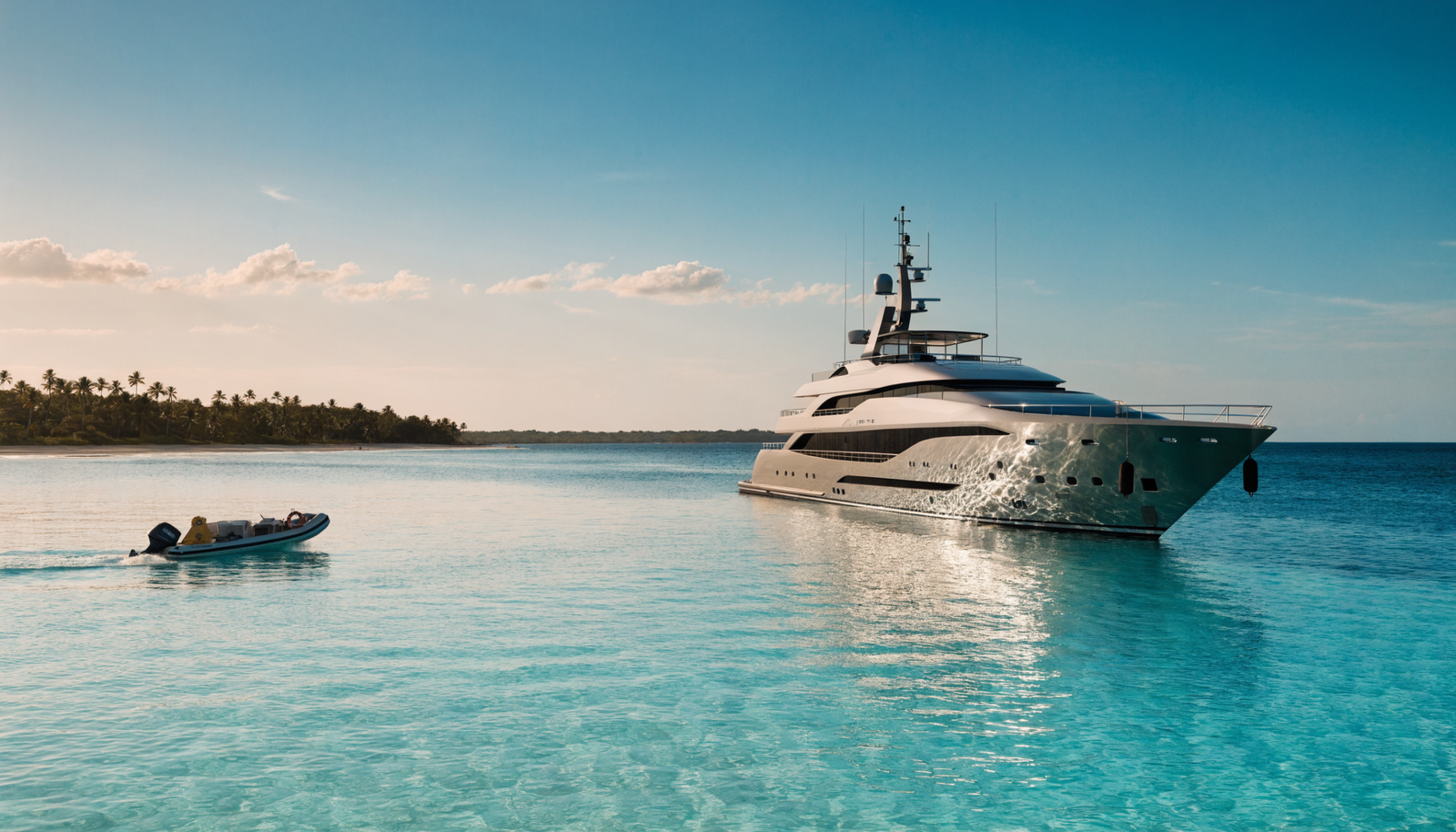
Provisioning a yacht in a major port is an errand. Provisioning one in a remote anchorage, a Pacific atoll, a far stretch of the Indonesian archipelago, a quiet corner of the Med in the off-season, is a different discipline. Get it right and the guests never notice. Get it wrong and you’re rationing fresh produce three days into a two-week passage.
The gap between those two outcomes isn’t luck. It’s whether you lined up the right supplier before you left, or hoped the town at the end of the chart had what you needed.
Why remote provisioning is a different job
Distance changes everything. Local supply gets thin and unreliable. Anything imported carries a long lead time. The cold chain, easy to take for granted at a fuel dock, develops gaps that quietly ruin fresh and frozen stock. Customs and clearance add friction. And then there’s the plain logistics of moving crates from a distant town to a boat sitting on the hook. A supplier who’s brilliant in Fort Lauderdale can be useless in Benoa.
Where remote provisioning goes wrong
Nearly every remote provisioning disaster is one of these four. In a big port they’re a nuisance. Far out, they’re a shortage nobody aboard can fix.
What a good remote provisioner does differently
They source locally and import in the same order, pairing fresh produce off the dock with the hard-to-find goods that have to ship in. They own the cold chain from source to slip instead of dropping stores at a warehouse and calling it done. They clear customs to the vessel, not just to the country. And they order on the real calendar, the one that accounts for how far away “far” actually is.
How to prepare
Line up your provisioner before the passage, not during it. Share the itinerary, guest preferences, and dietary requirements early, confirm what’s genuinely available locally against what has to be shipped, and build in buffer for the delays that always come. Out there, the provisioner is part of how the crew succeeds, not an afterthought you sort out at the last dock.
Find a provisioner who delivers where you’re going
Find vetted yacht provisioning specialists, including agents who deliver to remote and expedition destinations worldwide, on ZipYacht. Tell us the itinerary and what the boat needs and a real person replies, no bots.
Run a provisioning or yacht-agent operation? List your service on ZipYacht and let captains planning remote passages find you first.