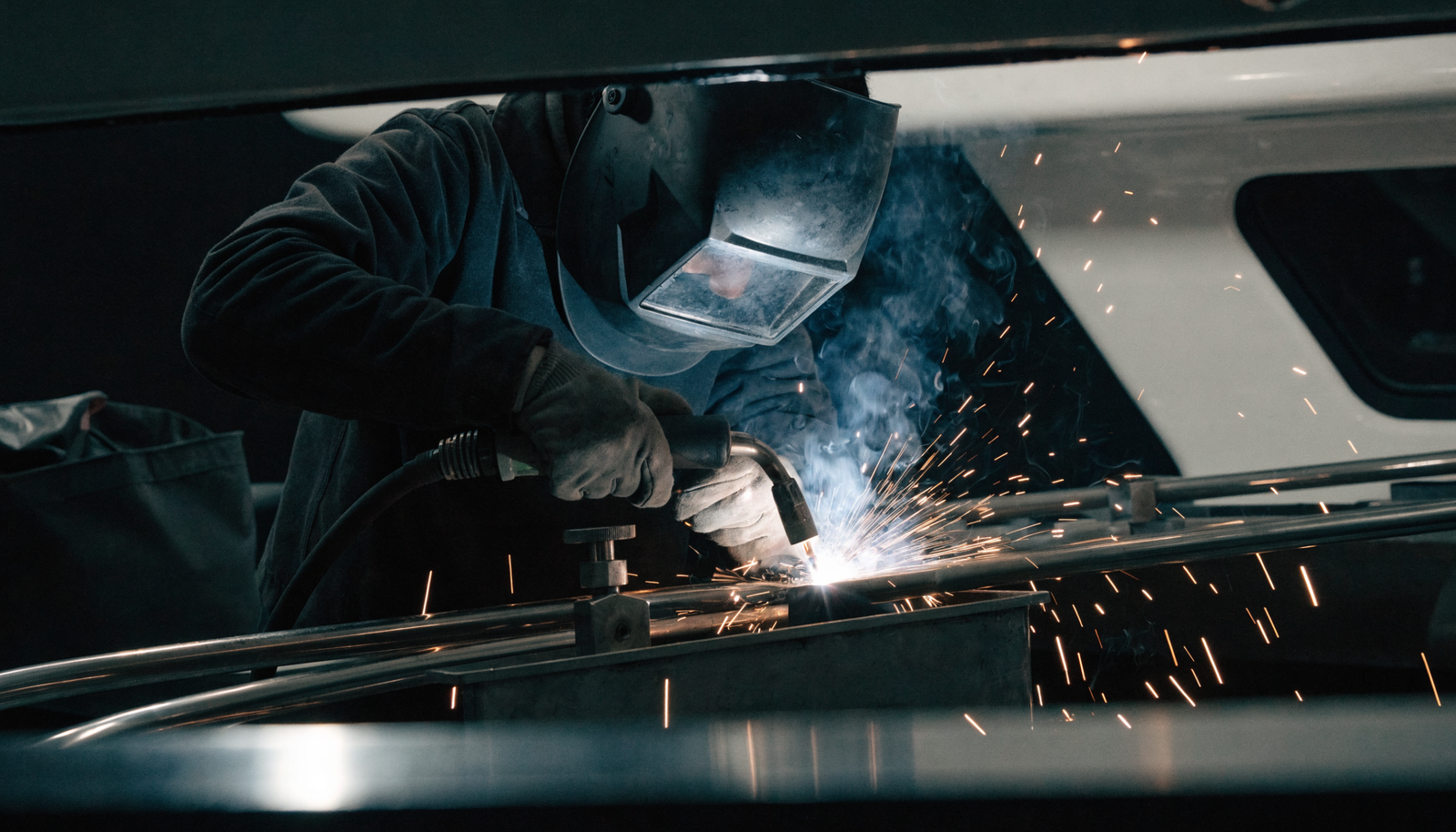
A cracked pulpit, a custom passerelle, structural aluminum work below the waterline. Marine metal fabrication is one of those trades where the gap between a good shop and a bad one doesn’t show up on the invoice. It shows up years later, as corrosion, a crack, or a failed weld in exactly the wrong place.
The saltwater doesn’t care how nice the work looked on day one. It finds the shortcut and it goes to work. So before you hand over the job, it pays to know what actually separates a marine shop from a guy with a welder.
What marine metal fabrication covers
Most yacht metalwork falls into a few buckets. Stainless steel handles rails, fittings, hardware, davits, and custom brightwork. Aluminum covers hull and structural work, tanks, and fabrication for alloy vessels. Then there’s the custom one-off work, passerelles, radar arches, boarding gates, engineering brackets, and the repair side: crack repair, re-welding, and corrosion remediation.
What separates a marine shop from a general fabricator
Any shop can lay a bead that looks fine. Four things decide whether it’s still holding in three years.
How to choose
Look for shops with real marine experience, not general fabricators who take the occasional boat job. Confirm the certifications match the work, and ask to see comparable jobs they’ve actually done. Then ask about materials and welding standards directly. A shop that knows the trade will happily walk you through both. One that gets vague is telling you something.
Find a shop that builds it to last
Compare vetted yacht metal fabrication and welding shops, many of them class-certified, on ZipYacht. Tell us the job and the vessel and a real person replies, no bots.
Run a marine fabrication or welding shop? List it on ZipYacht and get in front of owners and captains who need the work done right.