
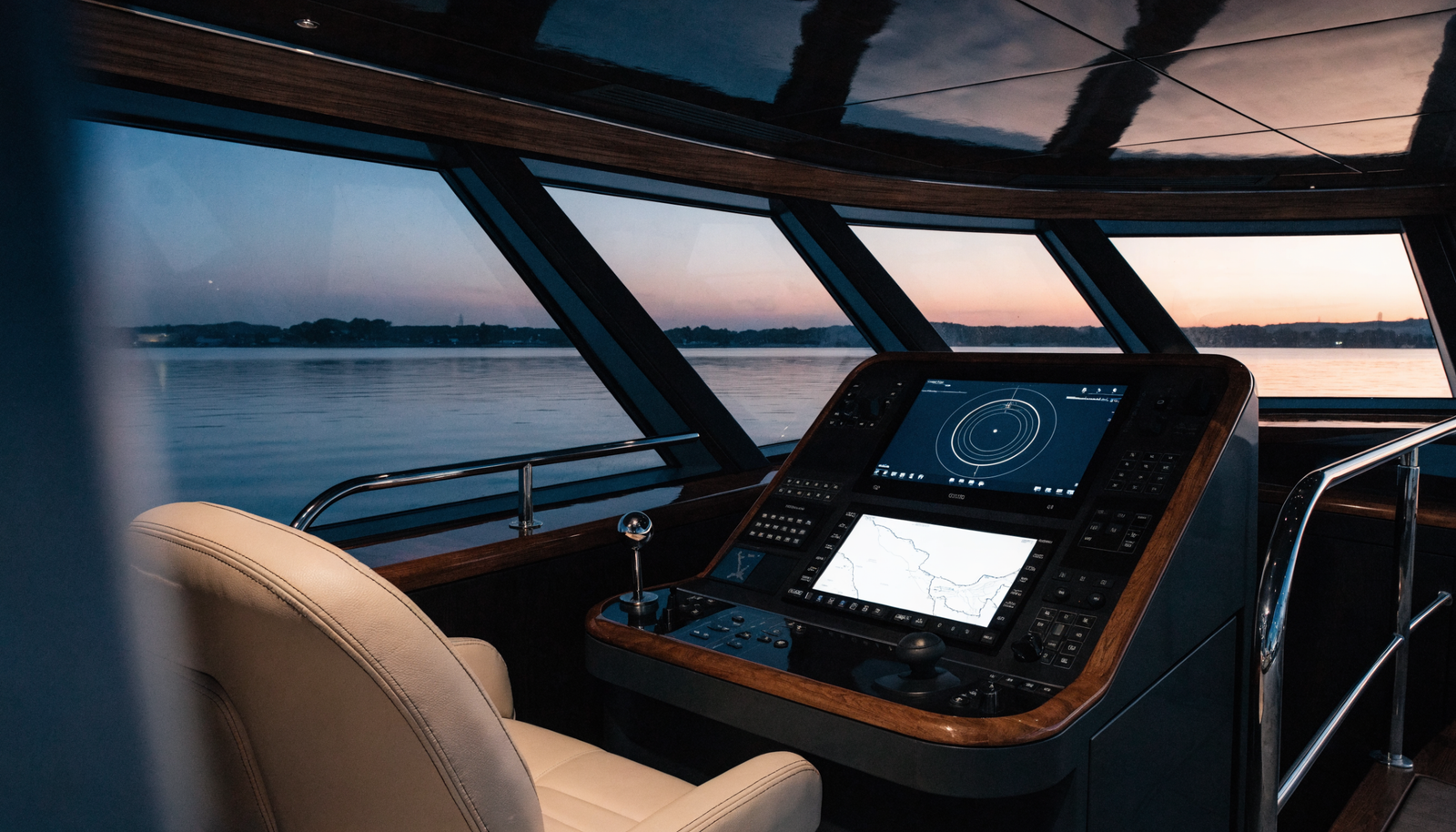
A helm upgrade is easy to get wrong in an expensive way. You can spend a fortune on the best individual black boxes and still end up with a bridge full of screens that don’t talk to each other. On a yacht, the electronics aren’t the product. The integration is.
Here’s what modern marine electronics actually cover, why the install matters more than any single unit, and how to pick someone who won’t leave you with a wiring diagram nobody understands.
What “marine electronics” actually covers
It’s four jobs, not one: getting there, staying reachable, knowing what the boat is doing, and tying it all together. Most upgrade regret comes from nailing one and ignoring the others.
Integration beats any single black box
The difference between a helm that feels effortless and one that fights you isn’t the brand on the screens. It’s whether the radar, plotter, autopilot, sensors and comms share one network and one clean interface. A great integrator makes five systems behave like one. A parts-swapper leaves you toggling between four remotes to answer one question.
How to choose an installer
Marine electronics is its own trade, closer to systems engineering than to swapping a stereo. Look for installers who are factory-certified on the brands you run (Garmin, Raymarine, Furuno, Simrad and the like), who design the network before they mount a thing, and who hand you clean documentation at the end. Ask how they handle integration across brands. A pro answers easily. A generalist gets vague.
Find a marine electronics specialist
Compare vetted yacht marine-electronics installers by port on ZipYacht, so the upgrade is designed once and done right. Tell us the boat and the systems aboard and a real person replies, no bots.
Install and integrate marine electronics for a living? List your service on ZipYacht and get in front of owners and captains planning a helm refit.