
All Carpentry & Interior in Ocean City
Yacht Carpentry and Interior Joinery Worldwide
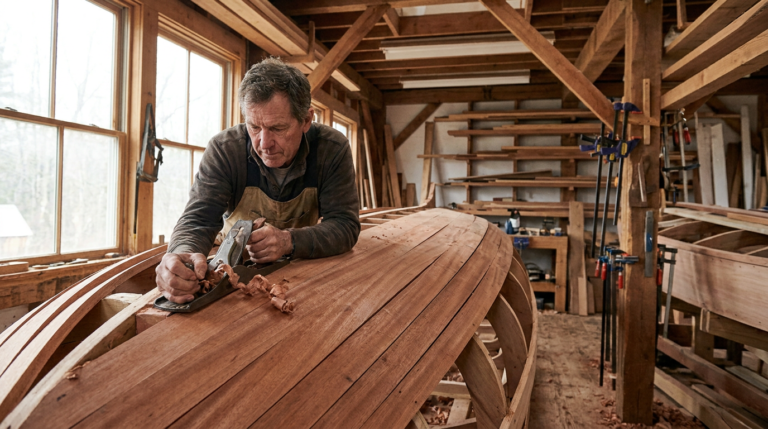
Yacht joinery is cabinetry built to survive movement. A galley drawer on land only has to open and close. The same drawer at sea has to stay shut through a beam sea, absorb hull flex without splitting its joints, and hold a finish through years of humidity swings. That is why yacht carpentry is a separate trade from shore joinery, and why shore cabinetmakers taking their first marine job so often produce work that looks superb at handover and fails within two seasons.
The companies listed here cover custom yacht carpentry from single-cabin refurbishment to full interior refits: veneer and solid-timber cabinetry, curved and compound-curved panels, soles and sole hatches, headliners, doors and door frames, bookmatched veneer work, marquetry and inlay, and the structural joinery behind the visible finish. Many also handle interior repairs after water ingress, veneer matching on discontinued timbers, and the fitting-out of interiors designed by an outside studio.
Two things separate marine joinery from the rest. First, materials and construction: marine-grade substrates, moisture-tolerant adhesives, fastening and floating panel details that let timber move without cracking, and finishes rated for UV and salt. Second, templating. Almost nothing aboard is square or flat, so accurate joinery is templated aboard, built in the shop, and returned for fitting, which means the shop’s proximity to the vessel, or its willingness to travel, is a real cost factor.
Listings show which yards and regions each company works in, whether they run their own shop or work aboard, the timbers and finishes they specialise in, and whether they take on classic restoration work. Listings are independent, and enquiries go direct to the company.
Q: What is the difference between yacht joinery and ordinary cabinetmaking?
A: Construction detail and materials. Marine joinery uses moisture-stable substrates, adhesives and finishes rated for humidity and salt, floating panel and fastening details that allow for hull flex and timber movement, and fixings engineered for a vessel that rolls. Shore-built cabinetry fitted to a yacht typically shows joint separation, veneer lifting and finish failure within a couple of seasons.
Q: Can a single cabin be refurbished without stripping the whole interior?
A: Usually yes, and it is the most common job in this category. The real question is veneer matching. A cabin refinished in a slightly different timber or sheen will read as wrong next to the ones either side. Good shops will source or hand-match the veneer and blend the finish into adjacent spaces rather than stopping at the bulkhead.
Q: How is custom yacht carpentry priced?
A: By templated survey aboard, then a shop quote. The variables are timber and veneer selection, the amount of curved or compound-curved work, finish specification and number of coats, and whether the vessel is available in a yard or must be worked in service. Curved work and high-gloss finishes are the two line items that most often surprise owners.
Q: How long does an interior joinery refit take?
A: A single cabin refresh is usually two to four weeks including finishing. A full interior on a 30 to 40-metre vessel typically runs three to six months, and it is almost always finishing and curing time, not carpentry, that sets the schedule. Building the joinery in the shop while the vessel is in another yard period is the main way to compress it.
Q: Can damaged veneer be repaired rather than replaced?
A: Often, and it is worth asking before agreeing to replacement. Skilled shops can patch, re-lay and blend veneer so a repair is invisible, including on discontinued timbers where an exact match is no longer commercially available. Water-damaged panels are the harder case. If the substrate has swelled, the panel is replaced regardless of how the veneer looks.
Q: Should the joiner or the designer specify the materials?
A: Both, in that order of conversation. A designer specifies the look, and the joiner tells you whether that timber, veneer thickness and finish will survive the environment it is going into. The interiors that fail early are almost always the ones where the specification was signed off without the person building it being asked whether it would last.
Browse contractors by trade

Browse by area
Owner and crew guides
Independent cost and hiring guides from the ZipYacht team.